
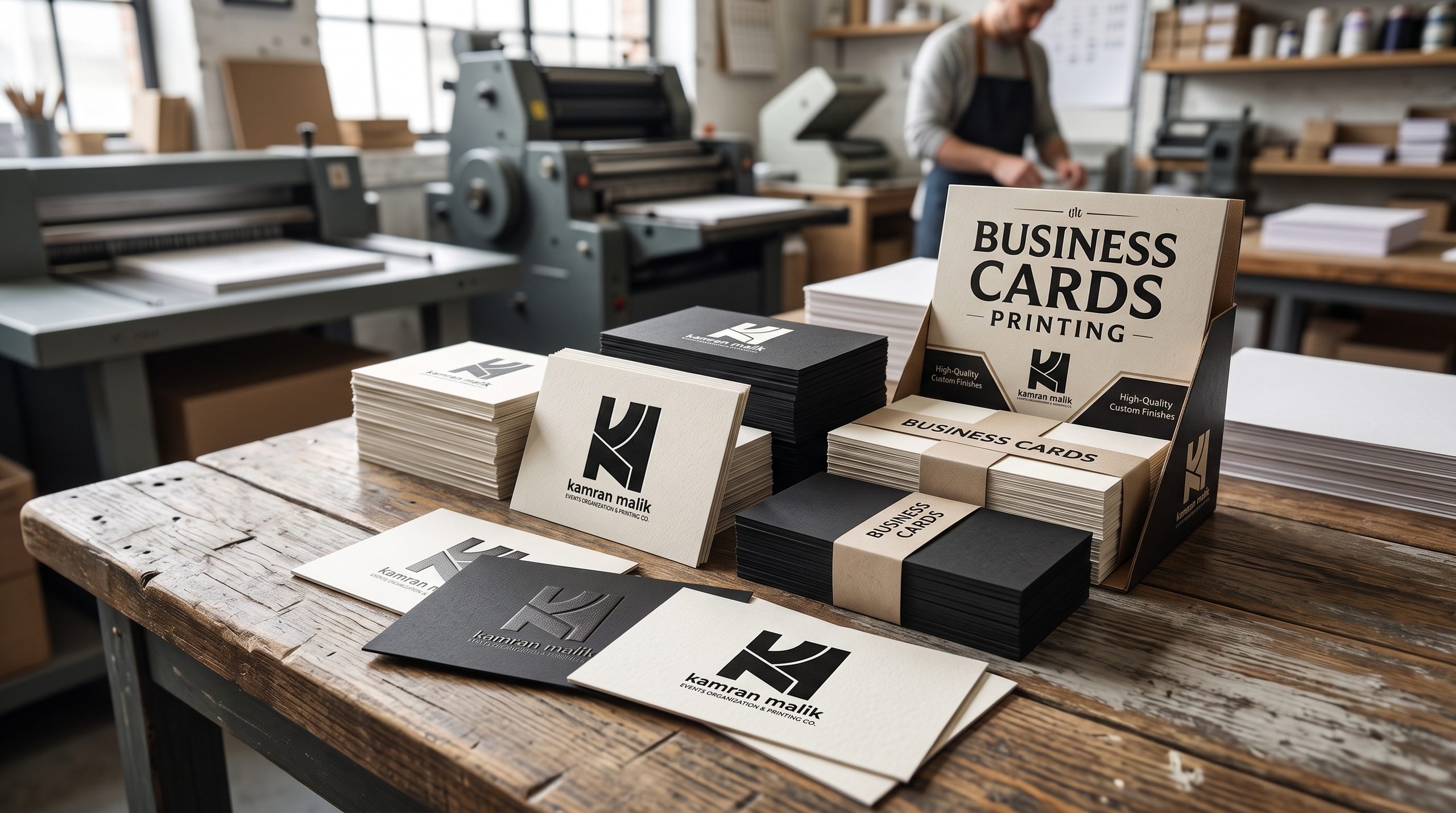
Custom Business Cards That Build Strong Connections
The first meeting typically plays out over the span of a few minutes, yet the impression can impact future opportunities. A well thought out business card provides a physical item for people to hold on to when the conversations are over. It tells them who you are, what your professional focus is, and how to get in touch with you — all without someone having to try to unlock a phone or open a web browser.
But great cards are more than just a pretty logo. All aspects of size, typography, material, finishing and message should harmonize with each other. By understanding these factors, firms, brands and event practitioners can create cards that instigate true connections.
Business Cards Printing That Builds a Strong First Impression
Business Cards Printing transforms an otherwise routine exchange of information into an important branding opportunity. Be it a growing firm, organising events or working alone, well-crafted cards can make your offerings sound more convincing. Their small size means that they are also easy to hand around at meetings, exhibitions, conferences and informal occasions of networking.
At Kamran Malik Events presentation is of utmost significance in every professional context. But it also needs to be practical — a card that shows you off without being functional? Well defined and identifiable colours, deliberate spacing in the letters that will help your recipient identify your brand easily can be beneficial too!
Choose Card Dimensions That Suit Your Audience
They are standard rectangular cards that slot easily into wallets, organisers, and cardholders. This model is useful when recipients have to gather data from various exhibitors or service providers. Adherence to some unique proportions would make them visually separate from other off-roaders, however the weird dimensions might be more difficult to packing up and much easier drop deem.
Choose a format if and only if you consider where your cards will actually go. The rounded corners help with the overall look and avoiding bent edges, but square cards offer a unique design surface for minimal designs. Stick a large enough buffer around the text using any shape.
Design a Layout That Communicates Clearly
Essential data are easy to find on a good design. Your name, title, business name, phone number and other relevant digital contact information should be arranged in a clear visual hierarchy. Do not plan to write labels, ornamental icons or story-driven elements in every single space you have at hand. White space balances page layouts and aids the visual hierarchy in clearly showcasing its most important elements.
Typography also influences credibility. Use readable fonts and create contrast between letterings and backgrounds Less often, a limited colour palette can prove more harmonious than multiple competing hues. If your brand uses a specific texture or drawing, use it wisely so contact details can be read easily.
Select Paper Stocks for the Right Feel
The kind of paper changes the feel of a card in your hand when you pass it to someone. Light stock leather is great for shorter promotional campaigns but a heavier stock will almost always produce a more robust product. Without a coat, paper gives you the more natural touch and is handy for those who would require writing papers. It can handle sharper graphics and finer detail in photographs.
Think of your industry as an atmosphere. Designers might opt for textured materials, whereas corporate teams usually go for smooth and classic finishes. Always ask for physical samples if possible as a screen cannot tell the weight, flexibility or surface texture of printed stock.
Explore Finishes That Enhance Brand Identity
The selected finishes should complement, rather than compete with, the design. Matte lamination has a more muted look, however gloss will create poppy colours. Soft touch finishes create a unique tactile experience. You can use selective foil or spot UV to highlight logos and highlights with careful design.
However, special finishes will increase the cost and can attract longer turnaround times. It is also a good idea to test readability in a variety of lighting conditions, especially when metallic lettering or reflective materials are used. At Kamran Malik Events we love to maintain the balance of visual polish in a way that supports your message instead of competing with it.
Prepare Print Ready Files With Confidence
Preparing artwork correctly avoids unnecessary production issues. Follow the printer sizes, bleed settings, color specifications and export format needed. In addition, ensure all names, numbers and logos fit comfortably within the safe zone so cutting is unable to take away any crucial aspects. High resolution graphics also help maintain the clarity of edges and fine detail.
Look through every single line before approval. P Check spellings and job title, telephone numbers, email address, website link and QR code. When possible, scan any code with multiple devices. Printing out a printed proof can highlight the contrast or sizing issues that you may miss when looking at it on your computer monitor.
Plan Quantities and Costs Without Waste
The order should conform to the frequency with which cards are distributed. For example, a networking professional going to frequent events would probably require larger amounts whilst a new company may wish to start off with small batches while their branding and contacts are finalised. Furnish quotations are compared as per source type, finish type, delivery date and total quantity.
Also keep in mind a lower price per card may not equal better value. These cards go to waste when phone numbers or job titles change. Expect demand to be lower than you need, provide time for corrections and inquire about manufacturing schedules in advance of committing deadlines to any important launch or exhibition.
Business Cards Printing for Lasting Professional Connections
Business Cards Printing is still useful because a personal introduction deserves a effortless follow up. Cards may accompany any type of product samples, a welcome folder, an appointment kit or packs with information from events. A short URL or an easy-to-remember website address, as well as a QR code if the magazine is proficient on its own digital level can tie conventional print to digital touch points.
Kamran Malik Events understand these specifics underpin Engagement for conferences, parties and businesses. Give your card when natural interest is established, not just when you are shoving it down everyone’s throat. This relevance has greater memory value to the reader and provides them with a reason to reach back out.
Conclusion
A well designed, reliable and accurate information is up to you. Whatever you pick from paper texture to font size, influences how other people experience your brand. Choose legibility, consistency and usability over fashionable visual effects, as these will quickly become tired.
Discover who your eyes are before ordering; confirm it, and examine any available physical samples beforehand. When wielded only with care, a small card is the most helpful intro tool that keeps going long after the first handshake and fosters better professional bonds. This also allows potential clients to easily save your details and refer you.

